Kentucky Security Deposit Law: What Landlords Must Do (and the Mistakes That Cost You the Whole Deposit)
Kentucky Security Deposit Law: What Landlords Must Do (and the Mistakes That Cost You the Whole Deposit)
Security deposits generate more landlord-tenant disputes than almost anything else in Kentucky rentals — and most of the landlords who lose those disputes don't lose because they were wrong about the damage. They lose because they skipped a procedural step the statute requires.
I'm an attorney, a rental property owner, and the operations manager for a property management company in Covington, so I see these disputes from every side. This guide walks through what KRS 383.580 actually requires, where it applies, and the specific mistakes that turn a legitimate deduction into a check you're writing back to your former tenant.
This article is general legal information for Kentucky rental owners, not legal advice for your specific situation. If you're in an active deposit dispute, talk to an attorney about your facts.
First: does this law even apply to your property?
Here's the thing most generic legal articles get wrong. Kentucky never adopted a single statewide landlord-tenant code. Instead, the legislature passed the Uniform Residential Landlord and Tenant Act (URLTA) and let each city and county decide whether to opt in.
That means your obligations depend on where your rental sits. As of April 2025, the jurisdictions that have adopted URLTA are: Barbourville, Bellevue, Bromley, Covington, Dayton, Elsmere, Florence, Georgetown, Lexington-Fayette County, Louisville-Jefferson County, Ludlow, Melbourne, Morgantown, Newport, Oldham County, Pulaski County, Shelbyville, Silver Grove, Southgate, Taylor Mill, and Woodlawn.
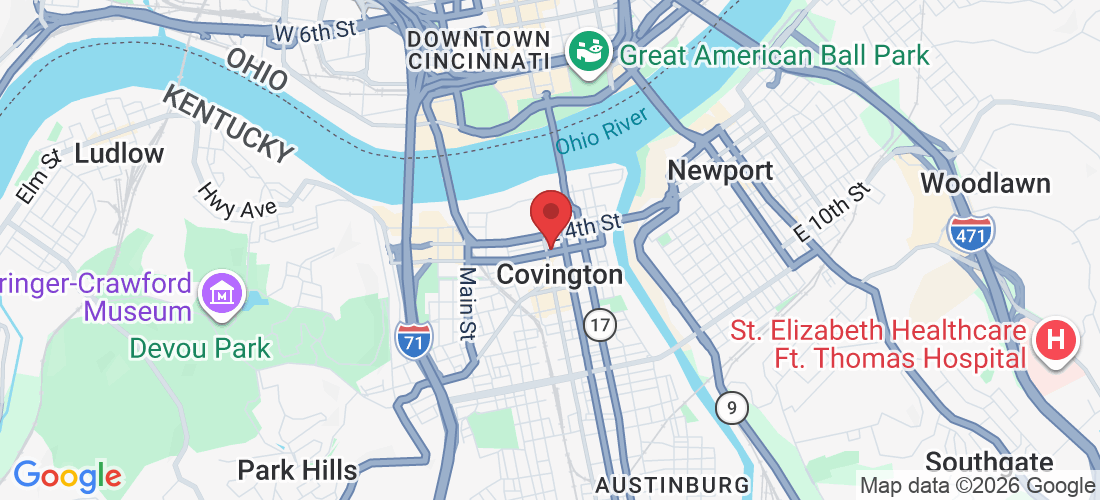
Look at what that means for Northern Kentucky specifically. Covington, Newport, Florence, Bellevue, Dayton, Ludlow, Taylor Mill, Elsmere, Bromley, Melbourne, Silver Grove, Southgate, and Woodlawn are URLTA jurisdictions. Independence, Erlanger, Fort Thomas, Fort Mitchell, Fort Wright, Alexandria, Cold Spring, Crescent Springs, Villa Hills, Edgewood, Hebron, Highland Heights, and Park Hills are not. The river isn't the only line that matters here — Erlanger and Elsmere share a border, and a rental on one side operates under a different legal framework than a rental on the other.
Own a fourplex in Covington and a single-family in Independence? You are operating under two different legal frameworks with the same lease template.
If your property is in a URLTA jurisdiction, KRS 383.580's requirements below apply to you with teeth. If it isn't, you're governed primarily by your lease and Kentucky common law — but I'll say this plainly: following the URLTA deposit procedures everywhere is what we do at Flow and what I recommend to every owner. It costs you nothing, it wins disputes, and it means you never have to think about which side of a city line your property sits on.
Requirement 1: A separate deposit account — that you disclose
Under KRS 383.580, security deposits must be held in an account used only for that purpose, at a bank or lending institution regulated by Kentucky or a federal agency. Commingling deposits with your operating funds or personal accounts is a violation by itself.
And the requirement isn't just to have the account — you must inform tenants of the location of the account and the account number. Practically, that means a line in your lease or move-in packet naming the institution and account. Most self-managing landlords I meet have never done this.
Why it matters: if you haven't complied with the deposit-holding rules, you can forfeit your right to withhold from the deposit at all — even for damage that's real, photographed, and expensive.
Requirement 2: The move-in itemized list
Before you collect a deposit and the tenant takes possession, the statute requires a comprehensive itemized list of any existing damage to the unit, and the tenant has the right to inspect the premises to verify the list's accuracy. The tenant signs off on it.
This document is your foundation for every future deduction. No move-in list means no baseline, and no baseline means a court has no way to distinguish the damage your tenant caused from the condition they inherited.
Requirement 3: The move-out list and the tenant's right to contest
When the tenancy ends, the statute requires the same exercise in reverse: an itemized list of damage you claim and the estimated cost of repair, with the tenant entitled to inspect and to dispute items. Deductions have to be for actual damage beyond ordinary wear and tear, unpaid rent, or other amounts the lease legitimately provides for.
Where landlords get in trouble here:
Charging for wear and tear. Faded paint, minor scuffs, carpet worn in traffic paths, small nail holes — that's the cost of doing business, not tenant damage. Stained carpet, wall holes, broken fixtures, and pet damage are deductible.
Round-number guessing. "$500 for cleaning" with no invoice reads as arbitrary. Itemize with real quotes or invoices.
No documentation trail. If it isn't on the move-out list with a cost attached, it's very hard to defend later.
Requirement 4: The return timeline — and the two clocks
KRS 383.580 doesn't work like a simple "return it in 14 days" statute. There are two mechanics to understand:
The 30-day rule. If the tenant leaves owing their last month's rent and doesn't demand the deposit back, you may apply the deposit to the unpaid rent after 30 days.
The 60-day rule. If the tenant leaves owing nothing and a refund is due, you must send notice of the refund amount to the tenant's last known address. If the tenant doesn't respond within 60 days of that notice, you may keep the deposit.
The practical takeaway: send your itemized statement and refund (or notice) promptly and to a documented address, and keep proof you sent it. The landlords who lose on timing are almost always the ones who can't prove when — or whether — they sent anything.
What noncompliance actually costs
Skip the separate account, the disclosure, or the itemized lists, and the consequences aren't a slap on the wrist — noncompliance can mean returning the entire deposit regardless of actual damage, and courts can award damages beyond the deposit itself. Add court time, filing costs, and the hours you'll spend assembling documentation after the fact, and a $1,400 deposit dispute could easily become a $3,000 problem.
The compliance checklist
For every Kentucky tenancy, in every jurisdiction:
Deposit held in a dedicated account at a regulated institution — never commingled
Account location and number disclosed to the tenant in writing
Signed, itemized move-in condition list
Signed, itemized move-out list with actual repair costs
Deductions limited to damage beyond wear and tear, unpaid rent, and legitimate lease charges
Itemized statement and refund/notice sent promptly to a documented address, with proof of sending
Or never think about any of this again
Deposit compliance is one of those areas where professional management pays for itself in a single avoided dispute. At Flow, every property we manage gets the separate account, the disclosures, move-in and move-out lists, and the statutory timelines handled as a matter of process — in Covington, in Independence, and everywhere in between, regardless of which rules technically apply.
If you own rental property in Northern Kentucky and you're not certain your deposit practices would survive a courtroom, get a free rent analysis and management quote — or just call (859) 993-7800 and ask us how we'd handle your properties.
Frequently Asked Questions about Kentucky Security Deposits.
Is there a limit on security deposits in Kentucky?
No statewide cap. Most landlords charge one to two months' rent, subject to fair housing laws.
Do Kentucky landlords have to pay interest on deposits?
No, Kentucky law does not require interest on security deposits.
How long does a Kentucky landlord have to return a deposit?
It depends on the situation — see the 30-day and 60-day mechanics above rather than assuming a single deadline.
Does KRS 383.580 apply everywhere in Kentucky?
URLTA applies only in the cities and counties that have adopted it — in Northern Kentucky that includes Covington, Newport, Florence, Bellevue, Dayton, Ludlow, Taylor Mill, and Elsmere, among others. Following its deposit procedures everywhere is best practice regardless.